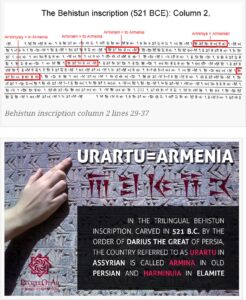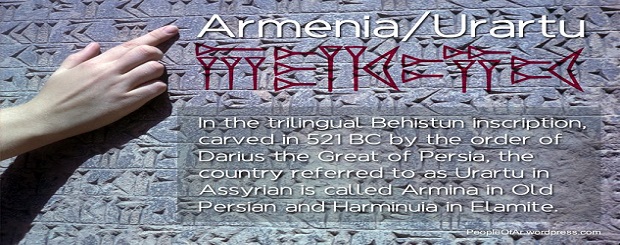
The bricks and walls of Erebuni Fortress, built in 782 BCE by King Argishti I of Urartu
The bricks and walls of Erebuni Fortress, built in 782 BCE by King Argishti I of Urartu, still carry carved symbols and cuneiform inscriptions that whisper the power and vision of an ancient kingdom.
These markings are more than decoration – they represent divine protection, royal authority, and the cultural identity of Urartu.
Each symbol etched into the stone and brick was a message to both gods and people, affirming the sacred connection between the fortress and the heavens.
Standing before these walls today, one does not simply see ruins;
one encounters the encoded language of a civilization that sought permanence through stone, faith, and artistry.

- – – – – – –
-
Les briques et les murs de la forteresse d’Erebouni, construite en 782 av. J.-C. par le roi Argishti Ier d’Urartu
Les briques et les murs de la forteresse d’Erebouni, construite en 782 av. J.-C. par le roi Argishti Ier d’Urartu, portent encore des symboles sculptés et des inscriptions cunéiformes qui évoquent la puissance et la vision d’un ancien royaume.
Ces inscriptions sont plus que de simples décorations : elles représentent la protection divine, l’autorité royale et l’identité culturelle d’Urartu.
Chaque symbole gravé dans la pierre et la brique était un message adressé aux dieux et au peuple, affirmant le lien sacré entre la forteresse et les cieux.
Devant ces murs aujourd’hui, on ne voit pas que des ruines ;
on découvre le langage codé d’une civilisation qui recherchait la pérennité par la pierre, la foi et l’art.