
A Story That Goes Back Thousands of Years
Armenian jewelry goes back thousands of years. Archaeological finds from Armenia show advanced work in gold, silver and bronze from the Bronze and Iron Ages, including the Urartian period.
We can’t say there was one unbroken jewelry tradition from Urartu to modern Armenia. But we can see a long history of metalworking that continued and changed across different periods and Armenian communities.
From Urartu to the Middle Ages
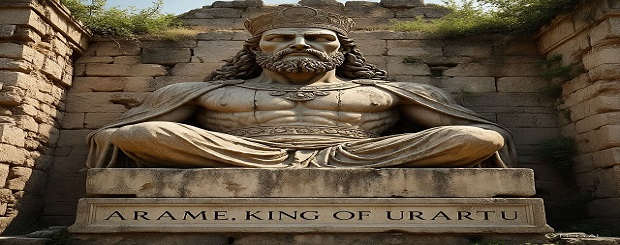
The Kingdom of Urartu flourished from the 9th to the beginning of the 6th century BC.
The History Museum of Armenia has Urartian gold, silver and bronze objects, including jewelry.
Metalworking continued through later periods, from the Achaemenid and Hellenistic eras to the Roman and medieval periods.
Medieval Armenian craftsmen became especially known for silver church objects, including Gospel covers, crosses and reliquaries.
Jewelry Was More Than Decoration
Jewelry could show wealth, social status and marital status. Some pieces also had symbolic or protective meanings. The belt was especially important in traditional Armenian dress.
The silver belts kept at the Treasury of Holy Etchmiadzin come from different parts of Western and Eastern Armenia. Their designs, clasps and techniques show clear regional differences.
Research by Nvard Vardanyan also shows that the belt had an important role in Armenian wedding traditions and could mark the bride and groom’s move into married life.
Different Regions, Different Styles There was no single Armenian jewelry style.
Van, Vaspurakan, Kars and other regions had their own traditions.
The Etchmiadzin collection shows differences in the way belts were made and decorated, and some pieces can be linked to specific regional workshops.
The Techniques
Armenian goldsmiths and silversmiths used many techniques.
* Filigree — thin metal wires shaped into delicate patterns.
* Niello — a dark material set into engraved silver.
They also used casting, engraving, gilding, enameling, granulation and stone-setting.
Van became especially known for decorated silverwork and niello.
Armenian Goldsmiths in the Ottoman Empire
During the Ottoman period, Armenian goldsmiths were active in Constantinople and other major cities.
The Duzian family became closely connected with the Ottoman Imperial Mint.
Mikael Çelebi Duzian became chief refiner of the Mint in 1762, and other members of the family later held important positions there.
Armenian craftsmen also worked for the Ottoman court, producing jewelry, medals, orders and ceremonial objects.
Armenian Goldsmiths in Egypt
Armenian goldsmiths were active in Cairo and Alexandria during the 19th century.
According to The Armenian Review, Alexandria had 45 Armenian craftsmen in 1864, including eight goldsmiths. Six of them had come from Istanbul. Some Armenian goldsmiths also worked for the Egyptian palace.
The Jevahirjian family served as royal goldsmiths during the reigns of Muhammad Ali, Ibrahim Pasha and Said Pasha
In the 1830s, Yeghia Jevahirjian was Jevahirji Bashi, or head goldsmith. Later, Hovhannes Bey Nakhnukh served as chief goldsmith during the reign of Khedive Abbas Hilmi.
A Craft That Traveled
Armenian craftsmen carried their skills to Constantinople, Egypt, the Levant, Iran, Europe, Russia and the Americas. This can make Armenian jewelry difficult to identify.
An Armenian craftsman working in Istanbul or Cairo might use the hallmark of the city where he worked rather than an Armenian mark.
Researchers therefore look at techniques, hallmarks, inscriptions, workshop traditions and archival records to identify the makers.
From Workshops to Industry
The Yerevan Jewellery Plant became an important jewelry center during the Soviet period. After Armenia became independent, Armenian jewelers in Armenia and the Diaspora began building international organizations.
The Armenian Jewellers Association grew out of an international meeting in Yerevan in 1997, and its founding bylaws were approved in 1998.
The Armenian Jewellers Foundation was established in Geneva in 2013 to document Armenian jewelry heritage, research Armenian jewelers and support education.
In 2014, Armenia established the Meridian Free Economic Zone in Yerevan for jewelry, diamond processing and watchmaking.
More Than Jewelry
Armenian jewelry connects ancient metalworking with medieval silverwork, regional traditions in Van and Vaspurakan, Ottoman workshops in Constantinople, Armenian goldsmiths in Egypt and the modern jewelry industry in Armenia.
It’s a story of craftsmanship, migration and skills passed from one generation to another.


Ahmed Abd El-Hamid – www.facebook.com/photo/?fbid=2585779821849099&set=pcb.2585746921852389


